
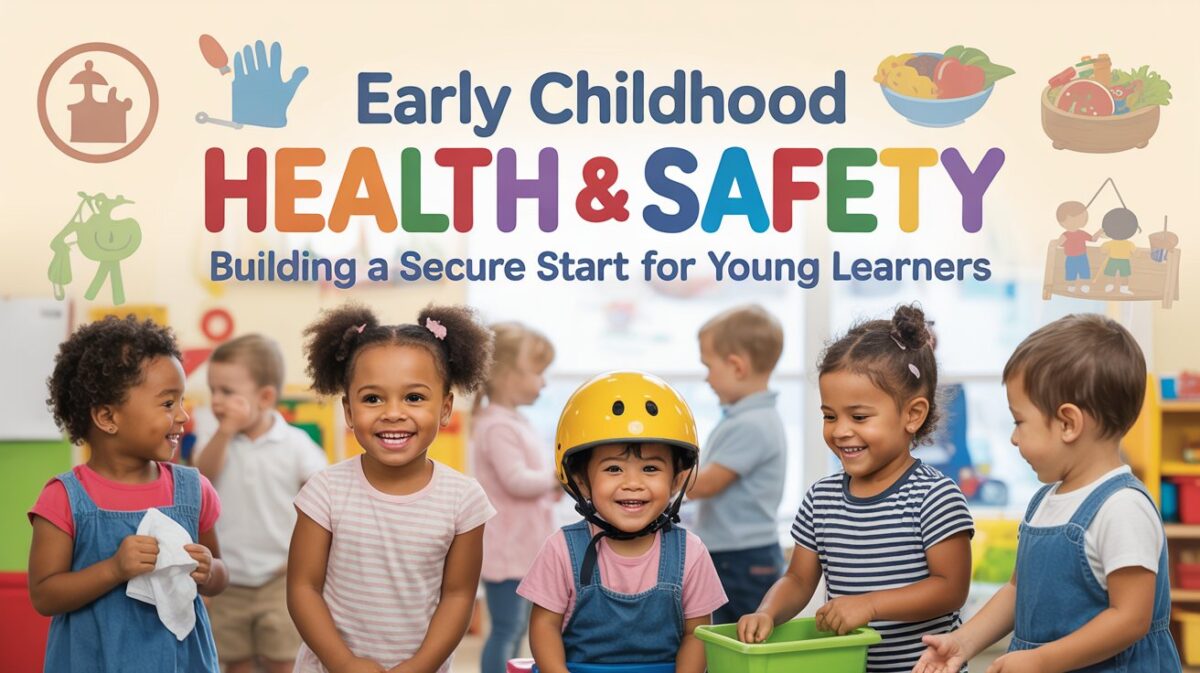
Early Childhood Health & Safety: Building a Secure Start for Young Learners
Walk into any preschool classroom or imagine it for a second: rows of cubbies, colorful blocks, a sandbox, laughter, and chatter. Now ask yourself: how safe do you feel that environment is?
Not just watching out for spills or playground accidents, but truly safe, healthy, and ready to support the little ones learning, growing, and exploring. That’s what a strong early childhood health & safety course aims for: it’s not just a checklist. It’s the key to giving children their best shot at a secure and thriving start.
In the U.S., millions of children spend their earliest years in care programs outside the home. These programs shape not only school readiness, but health, well-being, resilience, and future opportunity. With rising attention on childhood obesity, injury prevention, environmental hazards, and inclusive support for all children, having robust training in health & safety for early childhood has never been more vital.
Background and Context
Early childhood care and education have come a long way. What used to be simply supervising play and monitoring naps has evolved into a full responsibility for health, wellness, nutrition, safe environments, and inclusion. Professional standards, state licensing requirements, and national research now reflect the idea that early years health and safety are foundational for lifelong development.
For example, states often require training in safe sleep for infants, reporting child abuse, playground safety, hygiene protocol, and more. Early childhood settings are no longer about keeping children busy—they are about promoting healthy growth and protecting children at their most vulnerable ages.
Key Concepts and Terminology
Here are key terms that help you understand what a health and safety course for early childhood entails:
- Health & Safety (Early Childhood Context): The combination of practices, policies, environments, and staff skills that promote physical well-being, emotional security, and inclusive access in early childhood settings.
- Preventive Risk Management: The approach of anticipating hazards (such as falls, choking, infectious diseases, or chemical exposures) and designing environments and routines to reduce those risks.
- Inclusive Health & Safety Practice: Ensuring that children with diverse abilities, languages, backgrounds, or health needs are supported in safe and accessible settings, not left behind by generic protocols.
- Wellness for Providers: Recognizing that the health and safety of educators and staff contribute directly to the quality of care and the safety of children. Staff training, wellness, and support matter.
- Environment of Care: All physical spaces — classrooms, nap areas, outdoor yards, kitchens — which require regular review, safe surfacing, appropriate materials, and up-to-date health protocols.
Current State of Affairs
In the U.S., the numbers speak clearly. Young children spend substantial time in early care and education programs, which means those settings must be safe and healthy. While many centers meet strong standards, there are persistent gaps. For example, young children continue to experience high rates of injuries, illnesses, and missed days due to health and safety issues.
Many programs face challenges such as outdated equipment, limited outdoor play space, inconsistent staff training, and uneven implementation of health and safety protocols. Licensing requirements vary significantly by state, which creates uneven quality across the country. As a result, a course that equips early childhood professionals with robust health and safety skills is not only beneficial—it is essential.
Challenges and Opportunities
Challenges
- Staff in early childhood often receive minimal or inconsistent health and safety training, leaving gaps in practice.
- State regulations differ widely, making it hard for multi-site programs to maintain consistent health and safety practices.
- Many programs operate in buildings that are older or not optimized for safe play, sleep, nutrition, or environmental health.
- Children from underserved communities often face a higher risk from inadequate facility conditions, limited staff training, and fewer health supports.
- Emerging risks such as indoor air quality, chemical exposures, climate-related outdoor hazards, and infectious diseases require ongoing updates to training and protocols.
Opportunities
- Online, state-approved courses are providing new access to quality training for early childhood staff. For example, ECE University’s health and safety courses offer extensive modules covering illness prevention, safe sleep, injury avoidance, medication administration, and more.
- Preventive and data-driven approaches (audit tools, observation logs, risk review processes) enable programs to shift from reactive to proactive health and safety practices.
- Engaging families as partners in health and safety practices builds consistency between home and care settings and fosters trust.
- Upgrading physical environments (play yards, nap areas, ventilation, inclusive design) offers a tangible way to raise safety and health standards.
- Aligning health and safety training with overall program quality improvement plans ensures it is central, not supplemental, to program culture.
Case Studies / Examples
Example 1: Staff Training Made a Difference
An early learning center in the U.S. introduced a targeted 8-week online health and safety training for all staff. Modules covered safe sleep, playground audits, nutrition, emergency protocols, and inclusive practices. Six months later, the center reported a 30 % reduction in minor incident reports and higher family satisfaction with safety.
Example 2: Inclusive Safety Upgrades in Low-Income Sites
A childcare network serving children in underserved communities found higher asthma rates and more absences in older facilities. They partnered with local health agencies to conduct indoor air quality audits, install air purifiers, train staff on managing asthma, ma update their health and safety protocols. In the following year, the sites had fewer asthma-related incidents and improved attendance.
Example 3: Outdoor Play with Safety in Mind
A Head Start program redesigned its outdoor play area by adding shaded zones, soft-surface fall areas, natural loose-parts play, and created a weekly staff checklist for outdoor safety review. Children engaged more in outdoor exploration, and the number of playground-related injuries dropped markedly.
Expert Insights
According to early childhood health specialists, education in health and safety must be integrated into professional practice, not treated as an add-on. Trainers emphasize that health and safety knowledge must be paired with implementation routines, environment audits, and reflection by staff. Experts also highlight that wellness for educators themselves affects the safety climate; staff who feel supported, trained, and well-resourced create safer environments for children. Finally, leading voices in the field argue that health and safety must embrace equity — design protocols that work for all children, especially those from historically marginalized communities.
Benefits and Impact
When a program invests in an early childhood health and safety course and follows through, the benefits multiply:
- Children have fewer injuries, fewer illnesses, less absenteeism, and stronger engagement in learning.
- Educators feel more competent, confident, and able to focus on teaching and relationships rather than crisis management.
- Families trust the program and participate more actively in health and safety practices. That trust supports better attendance and continuity.
- Programs often experience fewer insurance claims, fewer incidents, and stronger reputations — making operations more stable and sustainable.
- At the societal level, safe and healthy early childhood experiences help level the playing field. Children from all backgrounds start with better health, fewer disruptions, and improved readiness for school and life.
Future Trends and Predictions
- Micro-learning modules and on-demand training will become more common, allowing staff to complete short, rt focused units (such as safe sleep updates, inclusive health practices, or outdoor hazard reviews) in short bursts.
- Data-driven safety systems in early childhood will grow, including apps for incident logs, environment sensors for air quality, and dashboards for program leaders.
- More states and accrediting bodies will tie licensing to documented health and safety competencies and continuous professional development.
- Environmental health will take greater center stage: indoor air quality, green design, climate-resilient outdoor play, and chemical exposure monitoring will become standard parts of early childhood health and safety training.
- Staff wellness will be viewed as integral to program safety: programs will increasingly invest in staff physical, emotional, and professional well-being as part of their safety plans.
- Families will be more engaged: programs will offer accessible modules, mobile appss and home-practice guides so families and staff collaborate on health and safety.
Conclusion
Creating classrooms and care settings where children are safe, healthy ,and free to explore is not optional—it is foundational. A well-structured health and safety course gives educators the tools, frameworks, and confidence to move beyond compliance and toward excellence. When we design for inclusion, anticipate risks, partner with families and continuously reflect on practice, children thrive.
For U.S. early childhood educators and program leaders seeking flexible, state-approved training, ECE University’s Health and Safety (HS) Courses offer a robust solution. These online modules cover topics like illness prevention, safe sleep, injury avoidance, medication administration ,and playground risk assessment. The courses are CEU-approved, mobile-friendly, daily, and designed for busy professionals. Enroll today and boost your program’s health and safety culture. ECE University
Frequently Asked Questions
What is an early childhood health and safety course?
An early childhood health and safety course trains educators and program staff on building and maintainingsafe and healthyy and inclusive learning environments for young children. It addresses hygiene, nutrition, safe sleep, injury prevention, and emergency planning.
Who should take this course?
Educators, child care staff, program leaders, family child care providers, and anyone working in early childhood education who wants to strengthen their knowledge of health and safety practices.
How does the course improve outcomes for children?
By equipping staff with the skills to protect children, reduce risks, promote wellness, and create inclusive environments, the course supports fewer injuries, better attendance, greater engagement, and stronger development.
What topics are covered in such a course?
Typical content includes illness prevention, safe sleep and SIDS reduction, medication administration, playground and equipment safety, inclusive practices, family communication, emergency protocols, and staff wellness.
Are CEUs or certifications offered?
Yes. For example, ECE University’s HS Courses include CEU-approved modules (each offering between 0.05 and 0.2 CEUs) that can satisfy many state training requirements. ECE University
How often should training be updated?
Training should be refreshed annually or whenever major health, safety, or environmental standards change. Ongoing reflection, audit, and update are best practices.