
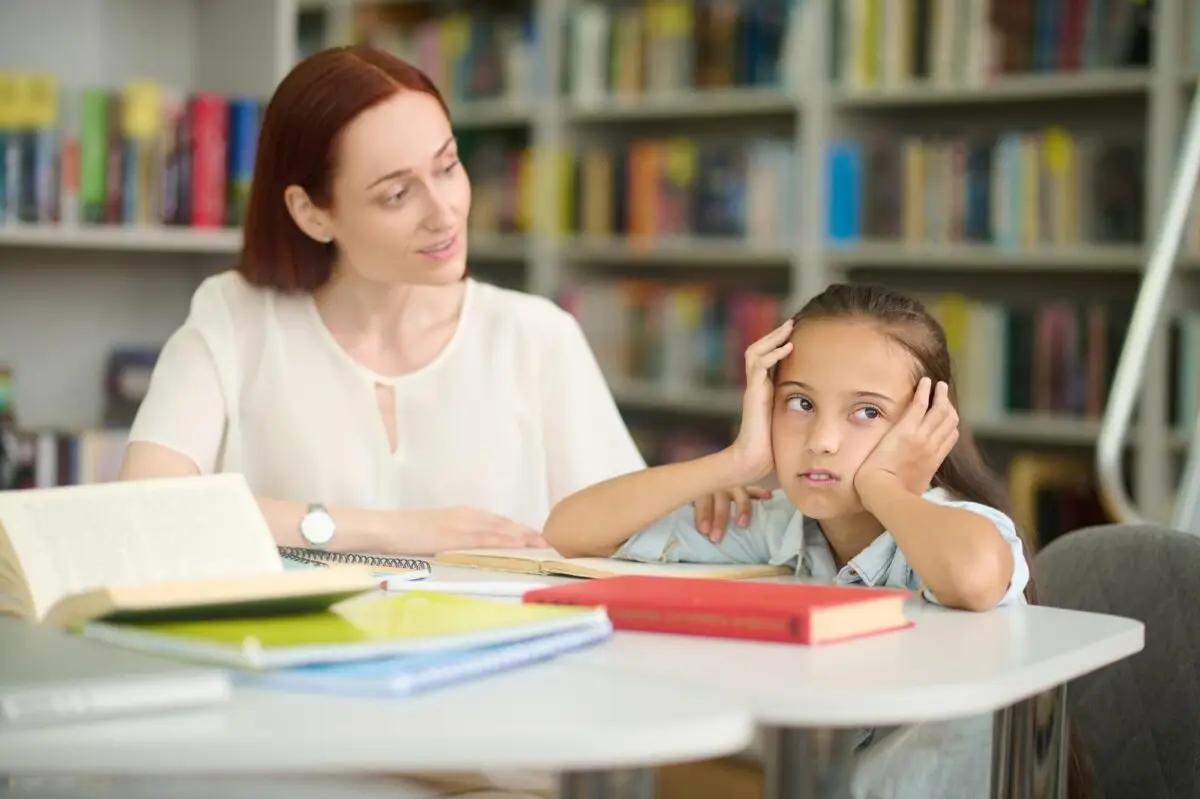
You care about every child in your classroom. But here is something no one warns you about in teacher training: the children who struggle the most are often the ones you notice the least.
They don’t cry loudly. They don’t throw chairs. They sit quietly. They say they’re fine. And they keep falling further behind while the room buzzes around them.
Early childhood is the most critical window we have. Research consistently shows that unaddressed challenges in the preschool years — social, emotional, or developmental — compound over time. What starts as a small gap in preschool can become a significant one by second grade.
This blog walks you through 5 signs that a child is quietly struggling — signs that are easy to miss in a busy classroom. For each sign, you’ll find what to look for, why it matters, and what you can do about it today.
Sign #1: They Are Always “Just Fine”
Ask them how they’re doing — “Fine.” Check if they understand the activity — they nod. Walk past them during work time — they’re coloring, quietly, heads down.
Everything looks okay. That is the problem.
Children who have learned that expressing a need leads nowhere often stop trying. They’ve quietly concluded that their feelings are too much, their confusion doesn’t matter, or that asking for help is somehow wrong. So they internalize. They go invisible. And they fall behind.
What to look for:
- Never asks for help, even when clearly stuck on a task
- Avoids eye contact during learning activities or check-ins
- Completes tasks quickly but without engagement or real effort
What you can do: Stop asking “Do you understand?” Start asking “Can you show me how you’d do this?” Swap closed questions for open ones. Build brief, low-pressure one-on-one moments into your week — even two minutes at the art table can open a door.
Feeling like you need a stronger toolkit for reading children’s emotional cues? ECE University’s Child Behavior courses cover emotional regulation, hidden stress signals, and practical classroom strategies — starting at just $10. Browse the Child Behavior course
Sign #2: Sudden Changes in Behavior
A child who was cheerful last month is now irritable every morning. A child who loved circle time now refuses to sit. A usually quiet child has started hitting peers.
Teachers often respond to the behavior — the hitting, the crying, the defiance. But here is what matters: what changed?
Behavior is communication. A sudden shift almost always means something has shifted in that child’s world. It could be a new sibling, a change in routine, stress at home, a friendship conflict, or the first signs of a developmental challenge emerging. The behavior is the symptom. The struggle underneath is what needs attention.
What to look for:
- Aggression or emotional outbursts that appear suddenly in a previously calm child
- Regression to younger behaviors — thumb sucking, bedwetting, baby talk
- Loss of interest in activities or friendships the child previously enjoyed
What you can do: Keep a simple behavior log. Note the date, time, activity, and what happened. After a few days, patterns become clear. Then open a conversation with parents — not to report bad behavior, but to ask, “Have you noticed anything different at home lately?” That question alone can unlock what’s really going on.
Sign #3: They Play Alone — But Not by Choice
Some children are natural introverts who prefer solo play. That is healthy and normal. But there is a critical difference between a child who chooses to play alone and a child who desperately wants to join peers but doesn’t know how.
The second child hovers. They watch a group build a block tower. They take a step closer. They open their mouth to say something. Then they walk away to the corner and play by themselves — not because they want to, but because they don’t have the words or the confidence to step in.
To a busy teacher managing fifteen children, both kids look the same. They are not. Social skill gaps at this age don’t disappear on their own. They tend to grow — and they directly affect a child’s confidence, friendship quality, and readiness for kindergarten.
What to look for:
- Repeatedly watches group play from a distance without joining
- Tries to enter group play but is ignored or rejected, then retreats
- Rarely initiates conversation or cooperative play with peers
What you can do: Use small structured group activities with assigned roles — two to three children maximum. This removes the pressure of self-entry into a group. Teach specific phrases during morning meeting: “Can I play too?” and “What are you building?” When children have a script, they use it.
Sign #4: They Avoid Specific Activities — Every Time
Every time art time comes around, one child needs to use the bathroom. Every time the class does letter tracing, another child knocks over their cup of crayons. Every time reading begins, a third child starts being silly.
This is not coincidence. Children avoid what makes them feel incompetent. Avoidance is a coping strategy — and it is one of the earliest signals that a child is struggling with a specific skill area.
It might be fine motor skills. It might be early literacy. It might be attention, sensory processing, or something else entirely. But the pattern is telling you exactly where to look. Teachers who mistake this for deliberate disruption miss the message completely.
What to look for:
- Consistent avoidance of the same type of activity, week after week
- Disruptive behavior that starts right as a specific task begins — and stops when the task ends
- Physical complaints like headaches or stomachaches that only appear before certain activities
What you can do: Map the behavior to the activity. Once you identify the pattern, break the task into smaller steps. Reduce the pressure. Offer choices within the activity. If avoidance persists over multiple weeks, document it and consult with a specialist. Early intervention in skill gaps is far more effective than waiting.
Sign #5: They Cannot Stop Seeking Your Approval
This child is always by your side. They follow you during transitions, ask “Is this right?” five times per activity, and dissolve into tears if you step away to help another child.
On the surface, it feels like affection. But what you’re actually seeing is anxious attachment — and it is a sign of struggle, not just sweetness.
Children who cling this intensely are often struggling with self-confidence, underlying anxiety, or a deep fear of failure. They have learned that staying close to the teacher is the safest strategy available to them. This means they are not developing the independence, self-regulation, and resilience they will need when they move into kindergarten.
What to look for:
- Constant reassurance-seeking — “Is this right? Is this good? Do you like it?”
- Visible distress or meltdowns when briefly separated from the teacher
- Refuses to start any task independently and waits for teacher to begin alongside them
What you can do: Gradually build independence through scaffolding. Give the child a task they can complete alone, then check in after — not before. Celebrate effort over outcome. Create a simple “I tried it myself” visual chart where the child marks tasks completed independently. Each small win builds the internal confidence that anxious children desperately need.
Why Catching These Signs Early Changes Everything
The window between ages 3 and 6 is the most neurologically flexible period in a child’s life. The brain is forming connections faster during these years than at any other time. This means early identification and support have an outsized impact — far greater than intervention at age 8, 10, or 12.
A child who receives the right support in preschool — for social skill gaps, emotional dysregulation, early learning challenges, or anxiety — enters kindergarten with a genuine foundation. A child whose struggles go unnoticed arrives already behind. And research consistently shows that early gaps in social-emotional development, when left unaddressed, tend to widen over time rather than close.
Teachers are not expected to be therapists or diagnosticians. But you are the adult who sees these children every single day — more consistently than almost anyone else in their lives. That daily observation is an extraordinary privilege. And it is a powerful tool, if you know what to look for.
Final Thought
Not every struggling child cries. Not every struggling child acts out. Some of them sit quietly at the back of the room and wait for someone to notice.
You can be that person.
Slow down your observations. Watch not just what children do — but what they consistently avoid. Notice not just who is loud, but who is always “just fine.” The children who need the most support are often the ones working the hardest to hide it.
When teachers are equipped with the knowledge to read these signs, classrooms become places where no child falls through the cracks.