
Play Based Learning: How Play Helps Kids Learn, Grow, and Socialize
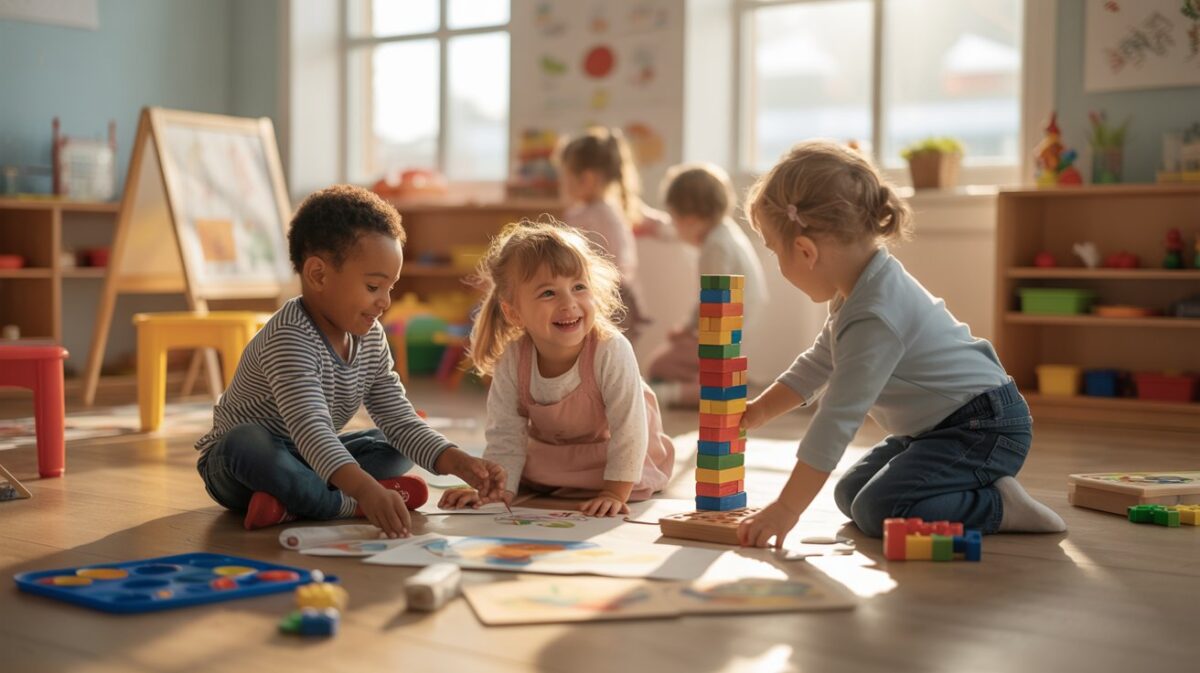
When observing a child building a tower or pretending to run a store, it is easy to see only entertainment. However, serious work is happening beneath the surface. This is the essence of play based learning. It is not merely a way for children to pass the time; it is the primary engine of human development during the early years.
Through play, children are not just having fun. They are actively constructing knowledge, testing theories, and building the architecture of their brains. The thesis is clear: play drives cognitive, social, emotional, language, and motor growth more effectively than passive listening ever could.
For educators and parents, the challenge lies in supporting this process effectively. Adults must know when to step in and when to step back to maximize learning. For educators wanting practical behavior strategies to support play, consider the Child Behavior course by ECE University
What play based learning means and why it matters
Play based learning is an approach that places structured and open play at the center of instruction. Children direct much of the activity; adults design conditions that support learning. This method supports active engagement and gives teachers access to authentic evidence of skill development.
Theoretical Foundations and Neuroscience
Establishing a framework for play based learning requires examining the giants of developmental psychology. Jean Piaget posited that children are active constructors of their own knowledge, using play to assimilate new information. Lev Vygotsky introduced the “Zone of Proximal Development,” suggesting that play allows children to behave beyond their average age, essentially “standing a head taller” than themselves.
Neuroscientific Evidence
Modern neuroscience validates these century-old theories. When a child plays, the brain releases brain-derived neurotrophic factor (BDNF), a substance essential for the growth of brain cells. Play reduces stress by regulating cortisol levels, keeping the brain in an optimal state for acquisition.
- Synaptic Density: Repeated play actions reinforce neural pathways.
- Executive Function: Navigating rules and roles strengthens the prefrontal cortex.
- Emotional Regulation: Social play necessitates managing frustration and excitement.
Recognizing these neurological benefits, it becomes clear that a lack of play is a developmental risk. Educators aiming to maximize these benefits must also be equipped to handle the behavioral challenges that accompany high-energy environments. Teachers can deepen classroom strategies through professional development such as the Child Behavior course by ECE University.
Core Domains of Development Supported by Play
Play is often categorized into specific domains, though in practice, these areas overlap significantly. A single activity often stimulates growth across multiple sectors of development.
Cognitive Development
Problem-solving serves as the cornerstone of cognitive growth in play. When a toddler attempts to fit a square peg into a round hole, they are engaging in early hypothesis testing. Play based learning provides a low-stakes environment for failure. Symbolic play, where a stick becomes a horse or a block becomes a phone, represents a massive cognitive leap. This ability to detach meaning from an object is the precursor to reading and mathematics, where symbols (letters and numbers) represent sounds and quantities.
Language and Literacy
Vocabulary expands rapidly during play. Children narrate their actions, negotiate roles, and practice storytelling. In a dramatic play center, a child acts as a doctor, using specific terminology like “stethoscope” or “prescription.” This contextual usage anchors the vocabulary in memory far better than flashcards. Furthermore, turn-taking in conversation is practiced incessantly during cooperative games.
Social and Emotional Growth
Empathy forms through role-playing. By pretending to be a parent, a teacher, or even a pet, a child steps outside their own perspective. Cooperation is not innate; it is learned. Building a tower together requires communication and shared goals. Conflict is inevitable, yet these conflicts are the crucible for learning resolution strategies.
Physical Development
Gross motor skills develop through running, climbing, and balancing. These actions build core strength and coordination. Fine motor skills are honed through manipulating small objects like beads, puzzles, and clay. These small movements are foundational for writing mechanics.
Self-Regulation and Executive Function
Perhaps the most critical outcome of play based learning is self-regulation. Games with rules require impulse control. A child must wait their turn, remember the rules (working memory), and adapt if the rules change (cognitive flexibility).
Handling the behavioral aspects of these domains is complex. Behavior-focused professional development, such as ECE University’s course, helps adults translate observations of these domains into effective interventions.
Varied Types of Play Across Ages
Play evolves as the child matures. Recognizing the specific type of play allows the adult to provide appropriate materials and challenges.
Sensorimotor and Exploratory Play (0–2 Years)
Infants and toddlers learn through their senses. They bang spoons, splash water, and drop toys to see them fall.
- Classroom Activity: Sensory bins filled with water, sand, or safe, textured materials.
- Home Activity: Allowing the child to explore safe kitchenware like plastic bowls and wooden spoons.
- Learning Outcome: Understanding cause and effect and object permanence.
Pretend and Dramatic Play (2–6 Years)
This involves acting out scenarios. It peaks during the preschool years.
- Classroom Activity: A prop box containing firefighter gear, medical kits, or restaurant menus.
- Home Activity: Using old clothes for dress-up and creating a “fort” with blankets.
- Learning Outcome: Abstract thinking, perspective-taking, and narrative structure.
Constructive Play
This is building or making things. It spans from stacking blocks to complex Lego creations.
- Classroom Activity: A designated block corner with unit blocks and architectural images for inspiration.
- Home Activity: Building with recycled materials like cardboard boxes and tape.
- Learning Outcome: Spatial awareness, physics concepts (balance/gravity), and planning.
Rough-and-Tumble Play
Often mistaken for aggression, this play involves wrestling, chasing, and tumbling. It is distinct from fighting as everyone is smiling and participation is voluntary.
- Classroom Activity: supervised obstacle courses or “tag” games.
- Home Activity: Wrestling on a soft rug or bed.
- Learning Outcome: Understanding physical boundaries and reading non-verbal cues.
Games with Rules
Board games, sports, and structured group games fall here.
- Classroom Activity: Simple board games like “Candy Land” or group games like “Duck, Duck, Goose.”
- Home Activity: Card games like “Go Fish.”
- Learning Outcome: Following instructions, winning/losing gracefully, and strategic thinking.
The Role of the Adult: Facilitation and Observation
The adult in a play based learning environment is not a passive supervisor. They are a researcher and a facilitator. The balance between scaffolding (supporting) and interfering is delicate.
The Facilitator Role
Adults set the stage. They provide “provocations”—materials arranged to spark interest. They model language. For example, if a child is building a zoo, the adult might ask, “What kind of enclosure does the lion need to stay safe?” This extends the thinking without taking over the play.
Knowing When to Step In
Safety is the primary trigger for intervention. Beyond safety, adults step in to mediate intractable conflict or to introduce a new concept when the child is stuck. This is “scaffolding”—providing just enough help to reach the next level.
Knowing When to Step Back
Allowing children to take risks and solve their own problems is vital. If a tower falls, the adult should wait. Often, the child will analyze why it fell and rebuild it with a stronger base. This resilience building is crucial.
Managing challenging behavior during play is common and often disrupts the flow. Educators can learn practical strategies for responding effectively through professional development programs like the Child Behavior course by ECE University, which provides concrete techniques for supporting children without disrupting the play arc.
Designing an Effective Play Environment
The environment is often called the “third teacher.” A poorly designed space causes behavioral issues and stifles engagement.
Elements of Design
- Open-Ended Materials: Items that can be used in multiple ways (blocks, fabrics, loose parts) are superior to single-use toys.
- Zoning: distinct areas for loud play (blocks) and quiet play (reading) prevent distraction.
- Predictability: Materials should have designated places. This fosters independence in cleanup and selection.
- Outdoor Access: The outdoors is not just for running; it is a learning lab for nature, science, and large motor risks.
Inclusion and Accessibility
Materials must reflect the diversity of the students. Books, dolls, and music should represent various cultures and abilities. Physical accessibility is non-negotiable; pathways must be wide, and tables adjustable.
Assessment-Ready Spaces
Teachers need spaces to document. Clipboards on walls, observation nooks, and digital devices for photos facilitate the capturing of learning moments. Program leaders can use ECE University resources to align behavior supports with environment design, ensuring the space itself reduces stress.
Curriculum Integration and Objectives
Aligning play based learning with rigid academic standards requires intentionality. It is not about abandoning standards but addressing them through different means.
The Planning Cycle
- Objective: Identify the standard (e.g., counting to 10).
- Invitation: Create a play scenario (e.g., a grocery store with money and items to count).
- Observation: Watch how children interact with the materials.
- Reflection: Did they count? Did they skip numbers?
- Follow-up: Adjust the materials or scaffold the next session.
Sample Application
Instead of a worksheet on buoyancy, a water table is filled with various objects. The teacher asks, “I wonder which ones will sink?” The children predict, test, and record results. This covers science standards regarding properties of matter.
Professional development on child behavior helps shape follow-up strategies that keep play child-centered, ensuring that teacher-led agendas do not overtake the student’s exploration.
Assessment and Evidence of Learning
Assessment in play is authentic. It measures what a child can do in context, rather than what they can memorize.
Documentation Methods
- Anecdotal Notes: Brief written records of specific events.
- Checklists: Tracking specific milestones (e.g., “Uses scissors with one hand”).
- Learning Stories: Narrative accounts of a learning sequence, often shared with parents.
- Media: Photos and videos capturing the process.
Tracking Transferable Skills
Educators look for the application of skills. A child who counts blocks is demonstrating the transfer of math concepts. Courses like ECE University’s Child Behavior course help teachers connect observed behaviors to developmental goals and adjust their scaffolding strategies in real time, ensuring assessment leads to action.
Analyzing the Benefits
The evidence supporting Play Based Learning: How Play Helps Kids Learn, Grow, and Socialize is robust.
- Academic Readiness: Studies show children in play-based programs perform better in reading and math in later grades.
- Social Competence: Reduced aggression and increased cooperation.
- Creativity: Higher divergent thinking scores.
- Resilience: Improved ability to cope with failure.
- Language Gains: Richer vocabulary and complex sentence structure.
- Physical Health: Lower rates of obesity due to active engagement.
Adult training enhances these outcomes by improving responses to behavior in play, ensuring the benefits are accessible to all students, including those with behavioral challenges.
Addressing Challenges and Myths
Despite the evidence, implementation faces hurdles.
Common Myths
- “Play isn’t learning”: This stems from a misunderstanding of how the brain acquires information.
- “Only free play counts”: Guided play is also highly effective.
- “Play is too messy”: Mess is often a byproduct of engagement; systems can manage it.
Operational Hurdles
Time is a scarcity. Standardized testing pressures often push schools toward drill-and-kill methods. Space and budget constraints limit material acquisition. However, “loose parts” (recycled materials) are a low-cost solution.
For teachers facing challenging behaviors during play, evidence-based training such as the Child Behavior course by ECE University provides strategies to maintain child-led exploration while managing classroom dynamics. This reduces the stress that often leads teachers to abandon play for rigid control.
Guidance for Parents and Caregivers
Parents are the child’s first playmate. Supporting play based learning at home does not require expensive toys.
- Follow the Lead: If the child is interested in bugs, hunt for bugs. Do not force a puzzle.
- Narrate: Speak about what is happening. “You are pushing the blue car fast.”
- Open-Ended Materials: Boxes, pots, and fabric offer more possibilities than battery-operated toys.
- Outdoor Time: Schedule daily time outside, regardless of weather (within safety limits).
- Limit Screens: Passive consumption replaces active play time.
- Join In: Play with them, but do not take over. Be a guest in their world.
- Embrace Boredom: Boredom is the precursor to creativity. Do not rush to entertain.
Parents wanting behavior-management tools can explore ECE University’s Child Behavior course for strategies that translate to home, helping to manage the transitions between play and routine.
Strategies for Teachers and Program Leaders
Educators must be intentional architects of play.
- Create Provocations: Set up invitations that spark curiosity each morning.
- Document Relentlessly: Make learning visible to parents and administrators.
- Co-plan with Families: Ask parents what the child plays with at home.
- Run Intentional Assessments: Use play time to gather data.
- Protect Time: advocate for long, uninterrupted blocks of play (at least 45-60 minutes).
Professional development is key. Recommend enrolling staff in targeted courses such as the Child Behavior course to build consistent behavior supports across staff, ensuring a unified approach to classroom management.
Policy and Practice Implications
On a systemic level, Play Based Learning: How Play Helps Kids Learn, Grow, and Socialize requires protection.
- Schedule Protection: Policies must mandate recess and choice time.
- Funding PD: Budgets must prioritize training on play facilitation, not just curriculum delivery.
- Assessment Policies: Report cards should reflect social and emotional growth, not just test scores.
- Investment: Funding for playgrounds and loose parts is an investment in public health and education.
Action step: Include behavior-focused training (e.g., ECE University’s course) in PD budgets to support consistent, research-based practice.
Evidence and Resources
Research from the American Academy of Pediatrics confirms that play is crucial for developmental milestones. Longitudinal studies, such as the HighScope Perry Preschool Study, demonstrate that children in active learning environments have better life outcomes, including higher earnings and lower incarceration rates.
Suggested further reading and professional resources include the Child Behavior course by ECE University as a practitioner-oriented resource
FAQs
Is play alone enough to prepare children for school?
Play based learning contributes core cognitive and social skills needed for school readiness. It should operate alongside targeted instruction in literacy and numeracy where appropriate.
How much play should a child have each day?
Aim for multiple play opportunities, including at least one sustained block of uninterrupted play. The exact duration varies by age and program context.
How do teachers keep play aligned with standards?
Teachers define clear objectives, design open invitations that support those objectives, and document outcomes. The planning cycle links play to standards without undermining child choice.
What if a child’s behavior disrupts play?
Address safety first, then use brief, consistent responses that teach alternative behaviors. Professional development in behavior strategies supports staff in applying responses that preserve play.
Can parents support play without special materials?
Yes. Everyday household materials and a consistent time block suffice. The adult’s role is to enable exploration, label language, and provide minimal structure.
Where can teachers get practical behavior tools?
Targeted courses on child behavior offer scripts, observation templates, and response routines. For example, the Child Behavior course by ECE University provides applied strategies that teachers can use immediately in play contexts.
Final Thoughts
Play Based Learning: How Play Helps Kids Learn, Grow, and Socialize is not a trend; it is the biological imperative of childhood. It is the mechanism through which children make sense of the world, build resilience, and connect with others. For the adult, the role is to set the stage and then trust the process.
Educators, try one new play provocation this week—perhaps a new sensory bin or a dramatic play theme—and observe the results. Consider a short PD like ECE University’s Child Behavior course to sharpen your response strategies
Parents, set aside 20–30 minutes of uninterrupted play today. Put the phone away, get on the floor, and let the child lead. The learning happening in those moments is profound.
Let us commit to the idea that play is not a break from learning; it is the learning. It is time to get serious about play.