
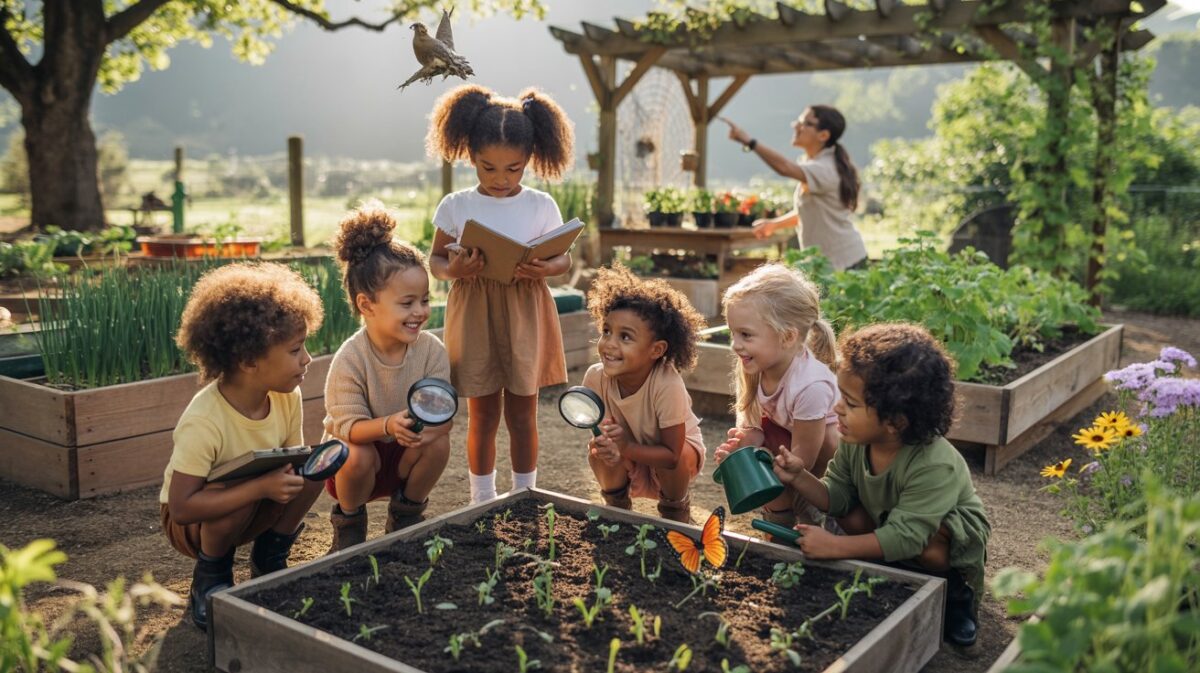
Positive Environmental Learning for Childhood Development
Positive environmental learning for childhood connects young children to nature through hands-on experiences, play, and emotional security. This approach builds curiosity, respect, and connection to the natural world while supporting social, cognitive, and physical growth. The article below sets out clear goals, practical activities, scheduling guidance, inclusion measures, assessment tools, and professional development recommendations so educators and caregivers can implement evidence-informed practice immediately.
What is positive environmental learning for childhood?
Positive environmental learning for childhood means structured, child-centered experiences that encourage direct interaction with nature, guided inquiry, and reflective practice. It differs from generic outdoor play by focusing on intentional learning goals—observation, stewardship, and simple scientific thinking—delivered through routines and playful investigation.
Key distinctions from general outdoor play
Programs that prioritize learning set clear outcomes, provide scaffolded questions, and build reflection into routines. Outdoor play often emphasizes free movement and unstructured exploration; positive environmental learning balances that freedom with brief, targeted prompts that expand vocabulary and critical thinking.
Why it matters: development benefits and strategies for early childhood environmental learning
Early exposure to nature produces measurable benefits across development domains. Evidence from early childhood environmental learning research shows gains in attention, emotional regulation, and prosocial behavior, as well as foundational science skills.
Developmental benefits
- Cognitive: stronger observation skills, improved problem-solving, and early scientific thinking.
- Social-emotional: increased cooperation, empathy toward living things, and reduced stress.
- Physical: enhanced gross motor skills and sensory integration through varied terrain and materials.
- Environmental attitudes: early stewardship, responsibility, and care for living systems.
- Long-term: healthier lifestyle choices, increased civic engagement, and sustained curiosity.
Strategies that work
- Make experiences hands-on and inquiry-driven.
- Provide predictable routines and short cycles of activity.
- Use low-cost, multisensory materials to reinforce exploration.
- Connect classroom practice with families and community resources.
- Model respectful interactions with nature to set behavioral expectations.
Target ages and developmental focus
Design activities that match milestones across infancy, toddlerhood, and preschool years. Below are targeted recommendations and what to observe for potential need of additional support.
Infants (0–12 months)
Infants require sensory exposure and caregiver-led routines that emphasize safety and co-regulation. Offer brief, supervised tactile experiences—soft leaves, smooth stones—while narrating sensations and actions.
Toddlers (1–3 years)
Toddlers begin to name elements in their environment and engage in short guided explorations. Focus on concrete labeling, simple choices, and one-step experiments that link action to outcome.
Preschoolers (3–5 years)
Preschoolers handle longer, collaborative investigations. Encourage basic hypothesis testing, plant care projects, and cooperative tasks that promote responsibility and negotiation.
Signs to monitor
Look for persistent avoidance of outdoor settings, heightened sensory overload, or lack of curiosity. If a child consistently withdraws, consider adapting the environment and consulting specialists if needed.
Core learning goals and competencies
Positive environmental learning should target a set of clear competencies that educators can observe and assess.
Nature awareness
Children identify plants, animals, and weather patterns using simple, consistent vocabulary.
Inquiry skills
Children observe, ask questions, make simple predictions, and test ideas through guided exploration.
Stewardship behaviors
Children learn to care for plants and animals, conserve resources, and respond to clean-up routines.
Practical science skills
Children use measurement, sorting, and recording in age-appropriate ways.
Social-emotional outcomes
Children build patience, cooperation, and a sense of responsibility that transfers to classroom routines.
Activity design principles
Design work to be child-centered, brief, and repeatable. Keep materials low-tech and accessible. Integrate cultural and family knowledge to make learning relevant.
Operational rules
- Ask before telling: use inquiry prompts that invite observation.
- Keep cycles short: introduction → exploration → reflection.
- Multisensory input: combine touch, sight, sound, and movement.
- Safety first: align activities with local ecosystems and seasons.
- Family connection: send simple home prompts to reinforce learning.
Practical activities and learning templates
Below are ready-to-use activities. Each entry lists the target age, time, materials, intended outcome, steps, and a variation for different settings.
Nature Walk + Observation Journal
- Age: Preschool
- Time: 15–20 minutes
- Materials: clipboards, paper, crayons, small bags for non-living finds
- Goal: observe, record, and share observations
Steps: Set a narrow focus (e.g., colors, textures); walk slowly; collect non-living items or take photos; draw or note findings; share one observation aloud.
Variation: Use a tablet camera for older preschoolers and create a digital collage.
Mini Garden / Planting Project
- Age: Toddler–Preschool
- Time: 20–30 minutes initial; ongoing care
- Materials: pots, soil, seeds or seedlings, labels
- Goal: teach plant life cycles and responsibility
Steps: Prepare soil, plant seeds, water, label each pot, and schedule a weekly observation.
Variation: Plant edible herbs to connect with snack time and food culture.
Sensory Nature Table
- Age: Infant–Toddler
- Time: 5–10 minutes per session
- Materials: tray, leaves, pebbles, pinecones, safe water container
- Goal: sensory exploration and language building
Steps: Present tray, name items aloud, model safe touch, allow short exploration.
Variation: Rotate themes by season or local habitat.
Recycled-Art Creature Build
- Age: Preschool
- Time: 20–30 minutes
- Materials: clean recyclables, glue, tape, paper, brushes
- Goal: creativity, reuse, and habitat awareness
Steps: Brainstorm creature features, assemble a model, name the creature, and display with a simple habitat label.
Variation: Connect art to a science prompt: what would this creature eat, and where would it live?
Weather Chart & Daily Check
- Age: All ages
- Time: 5–7 minutes
- Materials: chart, stickers, markers
- Goal: pattern recognition and routine building
Steps: Observe the weather together, place stickers, discuss changes, and introduce simple forecasting language when appropriate.
Variation: Integrate with a daily math or counting task.
Compost Jar Demo
- Age: Preschool
- Time: 10–15 minutes for setup; ongoing observations
- Materials: clear jar, soil, small food scraps, lid with air holes
- Goal: life cycles, decay, and prediction skills
Steps: Prepare the jar, predict changes, observe and document weekly, and discuss findings.
Variation: Create a worm bin if space and policies allow.
Citizen Science Snapshot
- Age: Preschool with adult support
- Time: 10–30 minutes
- Materials: phone or camera, simple log sheet
- Goal: basic data collection and community science participation
Steps: Choose a target (birds, insects), record a count or photo, submit to a local project, or create a classroom database.
Variation: Partner with a local park or conservation group.
Storytime: Environmental Themes
- Age: Infant–Preschool
- Time: 10–15 minutes
- Materials: picture books with environmental themes
- Goal: vocabulary and perspective-taking
Steps: Read, pause to ask one question about character choices, and connect the story to a short activity.
Variation: Use puppets to act out a scene about caring for a plant.
Implementation guide for classrooms and homes
A consistent schedule and clear adult roles make implementation efficient and scalable.
When to schedule
- Morning circle for observation and planning.
- Transitions for short sensory or breathing tasks.
- A weekly outdoor lab for extended exploration.
- Daily micro-practices, such as a 3–5 minute weather check.
Group formats and adult roles
Start with whole-group introductions, move to small-group exploration, and use one-to-one time for reflection as needed. Adults act as facilitators, safety monitors, vocabulary builders, and prompts for inquiry.
Materials and low-cost sourcing
Use natural found items, seek donations, and community partnerships. Local nurseries, parks departments, or parent volunteers often provide tools and materials at low or no cost.
Inclusion and accessibility
Design the environment and activities to include children with varied abilities and cultural backgrounds.
Sensory-friendly adaptations
Offer quiet zones, tactile alternatives, and predictable routines. Provide fidget items and visual cues for transitions.
Mobility accommodations
Use raised garden beds, wider paths, and accessible planting containers to include children with mobility needs.
Cultural relevance and language supports
Incorporate local practices, foods, and family knowledge. Use dual-language labels and picture prompts to ensure comprehension.
Family and community engagement
Meaningful involvement of families and community partners strengthens program impact and continuity.
Home activity ideas
- Backyard scavenger hunts with a one-line prompt.
- Plant-a-pot take-home projects with simple care instructions.
- Short citizen science tasks, like counting birds for a weekend.
Communication templates
Send concise messages that summarize activity, learning focus, and one suggested home practice. Example: “Today we observed seeds. At home, try planting a paper towel seed test and watch which seeds sprout first.”
Community partnerships
Work with local parks, libraries, nurseries, and conservation groups to expand opportunity and resource access.
Assessment and outcomes
Assessment should remain practical, observation-based, and focused on growth.
Observation checklist
- Shows curiosity during exploration.
- Uses targeted vocabulary (plant, root, leaf, weather).
- Demonstrates cooperative behavior during group tasks.
- Engages in care actions like watering or cleaning up.
Portfolios and rubrics
Collect photos, drawings, and short journal entries to document growth. Use a simple rubric with three levels—Emerging, Developing, Confident—across 3–5 core skills.
Measuring impact
Use before/after photos, anecdotal narratives, and family feedback to measure shifts in curiosity, responsibility, and well-being.
Troubleshooting and common challenges
Anticipate weather, space, safety, and engagement issues with practical alternatives.
Weather constraints
When outdoor time is not possible, use indoor nature tables, window observations, and virtual nature tours that preserve sensory engagement.
Safety concerns
Pre-screen outdoor areas for toxic plants or hazards. Educate children on safe handling and have a first-aid plan.
Limited space
Use containers, balcony gardens, or micro-habitats within the classroom to provide meaningful experiences.
Low engagement
Shorten tasks, offer multiple entry points, and use child-generated questions as starting points.
Safety, ethics, and consent
Follow robust safety and ethical practices when working with living things and family data.
Supervision and permissions
Obtain permissions for off-site trips, supervise interactions with wildlife carefully, and avoid pressuring children to handle animals.
Respect and cultural sensitivity
Avoid collecting from protected or private land without permission. Invite families to share local practices and knowledge rather than assuming uniform values.
Photo and data privacy
Secure consent before sharing photos or portfolio items and follow local data protection rules.
Professional practice and training
Educators benefit from targeted professional development that links environmental pedagogy to measurable classroom practice. Short courses and micro-credentials support immediate implementation and coaching.
Recommended professional development
Look for programs that include applied coursework, classroom practicums, and modules on inclusion, family engagement, and assessment. For professionals seeking structured pathways, ECE University provides a Professional Development suite that aligns with these needs and offers practical modules suitable for classroom pilots and staff coaching. Such programs help teams turn activity plans into consistent practice and strengthen communication with families and stakeholders.
Resources and further reading
Select high-quality curriculum guides, children’s books, local conservation contacts, and low-cost science kits. Prioritize materials that align with local ecosystems and community priorities.
Final takeaways and call to action
Positive environmental learning for childhood fosters curiosity, resilience, and practical science skills. Start with two or three activities from this guide, test them in a short pilot, and collect simple evidence—photos, notes, and family feedback. Use those findings to refine practice and scale gradually.
Try a pilot this week: run a 15-minute nature walk plus a short journal entry, then share one observation with families.
FAQs
Is outdoor time safe for all children?
Outdoor time can be safe if adults pre-screen environments, manage expectations, and provide supervision. Adapt activities for children with allergies or sensory sensitivities.
How often should environmental lessons occur?
Aim for daily micro-practices (3–7 minutes) and one longer weekly session (15–30 minutes) to build routine and retention.
How do we connect activities to learning standards?
Map activities to local early learning standards by aligning observation, vocabulary, and problem-solving tasks with curriculum outcomes.
What if we have no outdoor space?
Use container gardens, sensory nature tables, and community visits to parks or library programs.
Where can professionals get training to implement these strategies?
Seek professional development that includes practicum hours, inclusion training, and family engagement modules. Explore the ECE University Professional Development offerings for modular, classroom-ready content