
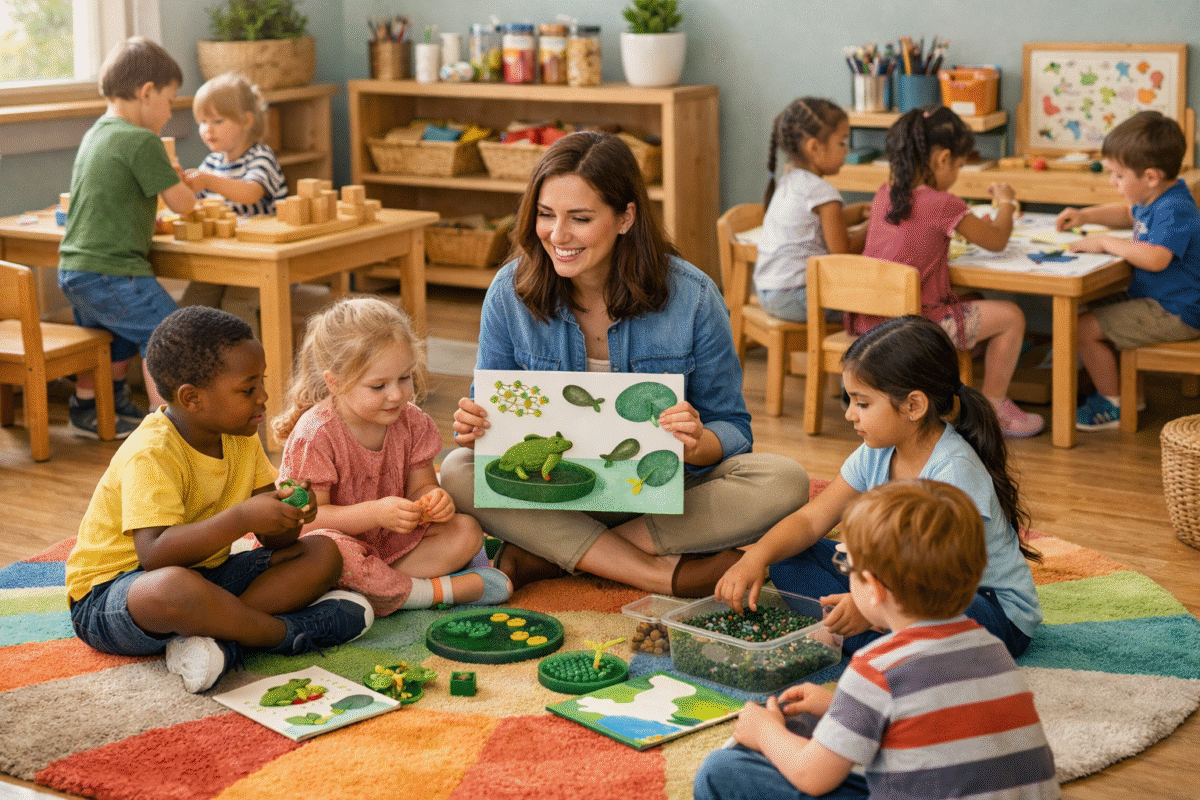
Proven Teaching Strategies for Modern Preschool Classrooms
Every preschool classroom is busy, emotional, and unpredictable. Some children arrive excited and ready to learn. Others need extra comfort, patience, and support before they can participate. Teachers balance learning goals, behavior guidance, family communication, and daily routines, often all at once. The most effective educators are not perfect. They are prepared, reflective, and equipped with proven strategies that work in real classrooms.
This article explores practical teaching methods that help modern preschool teachers create supportive, engaging, and successful learning environments.
Why preschool teaching looks different today
Preschool classrooms today are more diverse than ever. Children come from different cultural backgrounds, learning styles, and family situations. Many programs also serve children with special needs, language delays, or emotional challenges.
At the same time, families expect strong communication, documentation of progress, and high-quality instruction. Teachers are also required to meet licensing and professional development standards.
Modern teaching requires a balanced approach that combines emotional support, structured learning, inclusion, and continuous growth.
1. Build strong relationships first
Learning begins with trust. Children learn best when they feel safe, valued, and understood.
Strong relationships are built through:
- Greeting each child by name
- Listening attentively
- Showing empathy
- Responding calmly to emotions
- Maintaining consistent routines
When children trust their teacher, they are more willing to participate, take risks, and cooperate.
Classroom example: Start each day with a short individual greeting or check-in to help children transition into learning mode.
Common mistake: Focusing on rules before building connection.
2. Use play-based learning with clear purpose
Play is the foundation of early childhood learning. However, effective play is intentional, not random.
Purposeful play includes:
- Clearly defined learning centers
- Open-ended materials
- Teacher-guided exploration
- Observation and documentation
Through play, children develop language, math concepts, problem-solving skills, and social awareness.
Classroom example: In a block center, encourage children to count, measure, and describe their structures.
Common mistake: Allowing play without learning goals.
3. Practice positive classroom management
Modern classroom management focuses on guidance, not punishment. Children need clear expectations and consistent responses.
Effective strategies include:
- Visual classroom rules
- Clear daily schedules
- Gentle redirection
- Positive reinforcement
- Calm voice modeling
A predictable environment reduces anxiety and disruptive behavior.
Classroom example: Use picture cards to remind children of routines and expectations.
Common mistake: Responding emotionally to challenging behavior.
4. Differentiate instruction for diverse learners
Every preschool classroom includes children who learn at different speeds and in different ways. Differentiated instruction ensures that all children can succeed.
Differentiation involves:
- Small-group instruction
- Flexible activity levels
- Hands-on learning options
- Individual support
Teachers adjust methods without lowering expectations.
Classroom example: Offer multiple ways to complete an art project using different materials.
Common mistake: Teaching all children the same way at the same pace.
5. Create language-rich environments
Language development is critical during early childhood. Teachers play a major role in building vocabulary and communication skills.
Language-rich classrooms feature:
- Frequent storytelling
- Open-ended questions
- Descriptive language
- Daily conversations
- Print-rich environments
Children learn language best through meaningful interaction.
Classroom example: Ask “Why do you think that happened?” instead of “What color is it?”
Common mistake: Relying only on worksheets or flashcards.
6. Design inclusive and adaptive classrooms
Inclusive classrooms support children with different abilities, backgrounds, and needs. Universal design principles benefit all learners.
Key practices include:
- Visual schedules
- Sensory-friendly spaces
- Flexible seating
- Choice-based activities
- Clear transition cues
These supports help children regulate emotions and focus.
Classroom example: Create a quiet corner with soft cushions and calming materials.
Common mistake: Providing accommodations only after problems arise.
7. Strengthen family partnerships
Families are essential partners in early learning. Strong communication builds trust and reinforces learning at home.
Effective engagement includes:
- Regular updates
- Shared learning goals
- Parent conferences
- Home activity suggestions
- Cultural sensitivity
When families feel respected and informed, children benefit.
Classroom example: Share weekly learning highlights and simple home activities.
Common mistake: Contacting families only when problems occur.
8. Use observation and reflection to improve teaching
Great teachers continuously reflect on their practice. Observation helps identify what works and what needs adjustment.
Reflection tools include:
- Learning journals
- Portfolios
- Anecdotal records
- Peer feedback
- Self-assessments
Data should guide instruction, not overwhelm teachers.
Classroom example: Review observation notes weekly to plan small-group activities.
Common mistake: Collecting data without using it.
9. Invest in ongoing professional development
Teaching skills must evolve with research and classroom realities. Continuous learning strengthens confidence and effectiveness.
Professional development helps teachers:
- Learn new strategies
- Meet CEU requirements
- Improve classroom quality
- Advance their careers
Platforms like ECE University offer flexible online courses that fit busy schedules.
Classroom example: Complete one focused training module each quarter and share ideas with colleagues.
Common mistake: Treating training as a compliance task rather than growth opportunity.
How to apply these strategies consistently
Success comes from small, steady improvements. Focus on one or two strategies at a time.
Practical steps:
- Choose one area to improve each month
- Set a simple goal
- Observe results
- Adjust methods
- Reflect with colleagues
This approach builds long-term effectiveness without burnout.
Conclusion
Effective preschool teaching blends relationships, structure, play, inclusion, and reflection. No single strategy works alone. Success comes from combining proven methods with thoughtful planning and continuous learning.
By building strong connections, guiding behavior positively, engaging families, and investing in professional growth, educators create classrooms where children feel safe, curious, and confident.
Modern preschool classrooms thrive when teachers are supported, prepared, and committed to lifelong learning.